
Chapel Hill Resident Records
Use the record that fits the question, not a broad name search. A property entry can identify a recorded owner or mailing address. A voter result supplies registration context. A court result identifies a case reference, while vital records can establish an event or relationship only through their own access rules. Chapel Hill crosses town, county, state, and University record systems, so a useful result also identifies its custodian and date.
| Record | What It Confirms | Where | Access |
|---|---|---|---|
| Property record | Recorded ownership or mailing information | Orange County Real Property | Public portal |
| Voter registration | Registration status and election geography | North Carolina Voter Search | Public fields only |
| Court case summary | Case number, parties, type, and status where public | NC eCourts Portal | Portal preview, clerk files differ |
| Vital event | Event or relationship when statutory requirements are met | State or Orange County vital-record custodian | Event-specific access |
| Town record | A dated municipal document or request route | Town Clerk and department custodian | Inspection or request |
When a current address is known, begin with the parcel context and ask whether it identifies an owner rather than an occupant. When the person is known only by name, a voter or court index may separate similar names, but each match still needs a second independent signal. A historical directory or obituary is often a better dated corroborator than a guessed modern address.
Chapel Hill Court Records
The statewide eCourts Portal supports Smart Search and offers case number, party, business, citation, attorney, and related criteria. Its public case summaries may show case information, assignment information, parties, causes of action, and register-of-actions entries. Search a full name with a non-sensitive qualifier, such as a date range or county, and leave same-named candidates unresolved when the record supplies no independent connection.
| Public case-summary item | What it can show |
|---|---|
| Result list | Case number, caption or party, case type, filing date, county, and status. |
| Case summary | Court, judicial officer, assignment, named parties and roles, and public causes of action. |
| Register of Actions | Dated events, descriptions, filing party, disposition or status, and document links where available. |
| Access indicator | Whether material is view-only, restricted, clerk-held, or subject to a charge. |
The NC eCourts Portal opening screen is the source for the court-search image.
The Portal is useful for a near-real-time public summary, not for declaring identity or residence. The Orange County Clerk of Superior Court remains the custodian for court files and certified copies. Some case types and fields are withheld, and a blank Portal result does not prove that no paper or restricted record exists.
Note: Keep the search term, county, date, displayed status, and the Portal disclaimer with any court note.
Chapel Hill Voter Lookup Controls
North Carolina Voter Search requires a first name, last name, and a choice of Registered or Removed/Denied status. Middle initial, year of birth, and county are optional selectors. The result categories can include registration details, jurisdictions, polling place, sample ballot when available, absentee-ballot information, and voter history. A registration address is not a shortcut to property ownership, and a campus residence record is not a private-address finding.
- Use the county selector to separate Orange County candidates from nearby names.
- Use a year selector only to narrow a search, never as a substitute for identity proof.
- Treat Removed/Denied as a registration status, not a criminal or personal conclusion.
- Do not infer political beliefs from party, district, race, gender, or voting history.
The State also provides current and historical voter-registration files. Current files are updated weekly on Sunday evenings; removed voters can be omitted when their last vote is more than ten years old. Under G.S. 163-82.10 and G.S. 163-82.13, public lists and statewide files have defined fields, but full birth date, Social Security number, driver-license number, and photo-ID information are excluded. Voter-history files are separate and use NCID linkage rather than names and demographics.
Chapel Hill Vital Record Rules
Vital records are event records, not an unrestricted name database. North Carolina lists births from 1913, deaths from 1930, marriages from 1962, divorces from 1958, and fetal-death reports from 2001, subject to the record type and custodian. A certified copy normally requires the event details, acceptable identification, and a qualifying relationship, legal authority, or other statutory basis. The State lists a $24 nonrefundable search fee for each three-year period or portion on its ordering route.
The North Carolina vital-record order page is the source for the vital-order image.
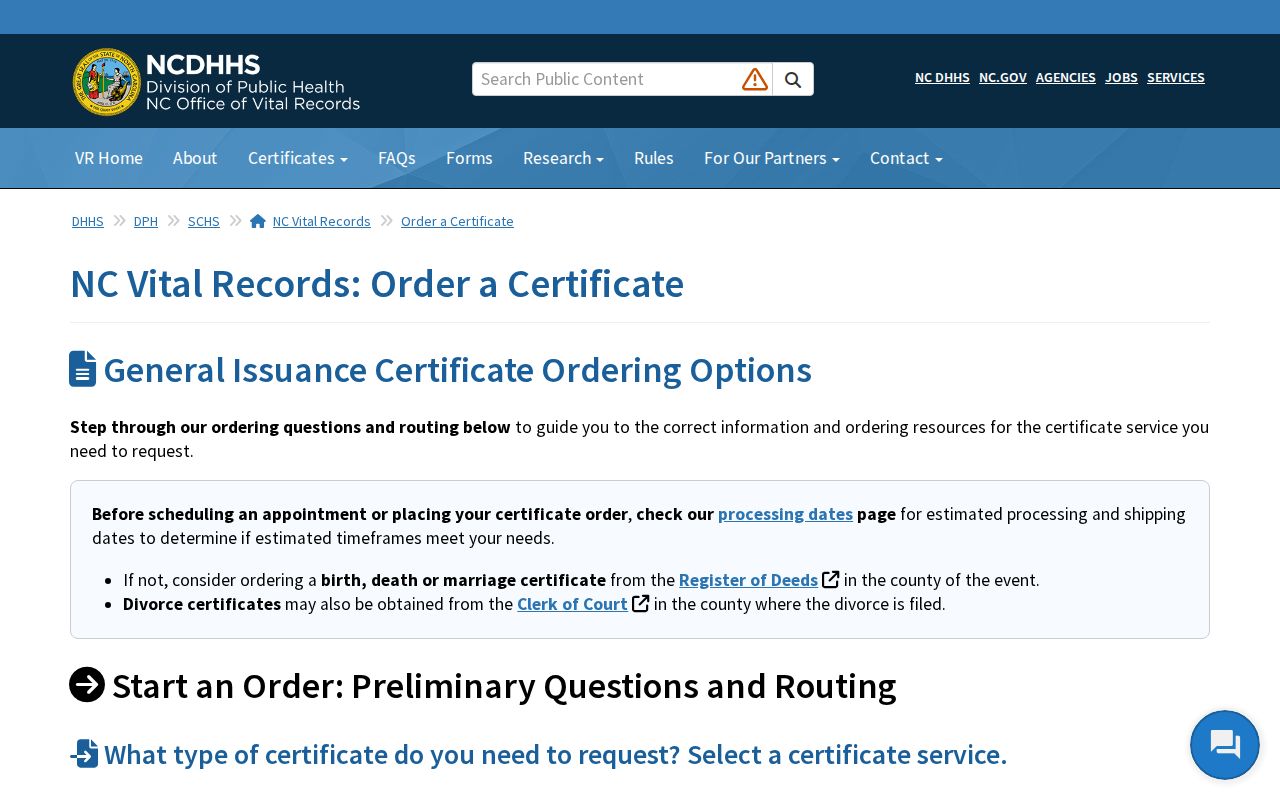
Its event, name, date, place, relationship, identification, payment, and order steps show why a broad person search cannot replace an eligible request. G.S. 130A-93, G.S. 130A-99, and G.S. 130A-110 distinguish protected details, inspection or abstract access, and certified-copy eligibility.
The Orange County vital-records service is the source for the local vital-record image.
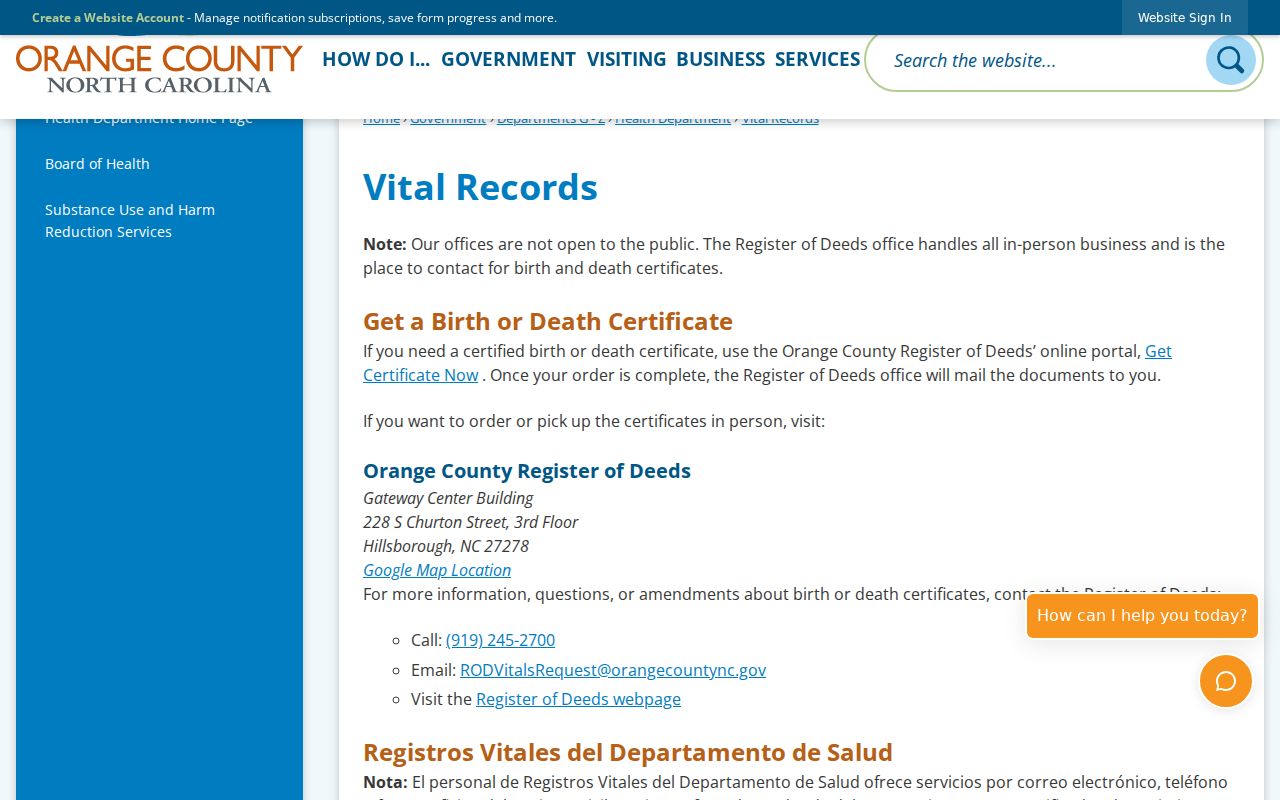
Orange County can route local certified birth and death requests through its Register of Deeds service. Divorce decrees come from the clerk in the county where filed. Ask the custodian which event details and relationship documents apply before ordering.
Verify a Chapel Hill Resident
A careful one-person check starts with a user-supplied name and a dated clue, then seeks two independent records that agree without exposing extra personal details. A property-owner string and a voter entry may both be current but answer different questions. A historic city-directory entry, obituary, estate filing, or recorded instrument may establish a dated connection instead. Do not force a match from a surname, ZIP label, appearance, or a single court caption.
- Write down the exact name, the source date, and one non-sensitive qualifier such as a town, institution, or old address.
- Use the Orange County PIN or real-property record to check parcel context, owner wording, and recorded date. Treat an owner as an ownership lead, not proof of occupancy.
- Run the eCourts party search and voter lookup separately, then compare only public fields that actually agree with the dated clue.
- If a certified court or vital record is truly needed, request it from the clerk or vital-record custodian and retain the official response.
- Docket
- A court’s running case record, often including filed events, dates, and status entries.
- Index versus image
- An index points to a record through names, dates, or numbers. An image is a reproduction of the underlying document and may be restricted or unofficial.
- Certified copy
- A copy authenticated by the record custodian for the purpose allowed by that office’s rules.
- Two-signal match
- A match supported by two independent facts, such as a dated address and a parcel instrument, rather than one name alone.
Note: A same-name result stays unresolved until a second source supplies a dated, non-sensitive connection.
Chapel Hill Resident Requests
North Carolina Public Records Law, Chapter 132, supports inspection and prompt copies of public records while preserving specific confidentiality rules. G.S. 132-6.2 also means an agency need not create a new database or complex compilation. For a local record, identify the custodian, record series, date range, name, and a parcel, case, or permit number if known. Ask whether inspection, an existing electronic copy, or a certified copy is the available route.
Orange County uses CivicPlus NextRequest for a centralized request process and status tracking. The county asks requesters to describe records clearly and avoid putting sensitive information in the request. For town-held material, the Town of Chapel Hill public-records route directs requests through the Town Clerk, who can send a permit, planning, meeting, or departmental request to the correct custodian.
A narrow request protects everyone involved. Ask for a dated record, a source format, and the legal basis for any redaction. An agency may send an existing online link rather than reproduce a record. Save that URL with the access date and the portal’s displayed coverage.
Chapel Hill Evidence Standards
Chapel Hill developed alongside the University of North Carolina, so town, county, University, and postal references often overlap without describing the same thing. The University’s 1789 charter, 1793 cornerstone, and 1795 opening explain the shared history, but a University reference is not automatically a town-residence record. Label every result as a court party, owner, voter registrant, historic directory subject, or organization participant rather than turning it into a current resident claim.
Prefer a live custodian record, then an official statute or download, an identifiable archival source, or a library-held primary source. Preserve the source URL, retrieval date, coverage date, exact query fields, result wording, and whether the evidence was an index, image, certified copy, or public summary. If two official records conflict, identify the series and date, then ask the custodian which field controls instead of choosing the more convenient result.
Chapel Hill Lookup Dataset Boundaries
Safety and custody sources answer different questions from a resident search. The Orange County daily custody report concerns county detention, while the state Department of Adult Correction search covers state prison, probation, parole, and historical information. Neither is a neighborhood list or a way to establish a person’s address. A name hit can reflect another person, another jurisdiction, a changed status, or a restricted record.
The North Carolina Department of Adult Correction search is the source for the state-dataset image.
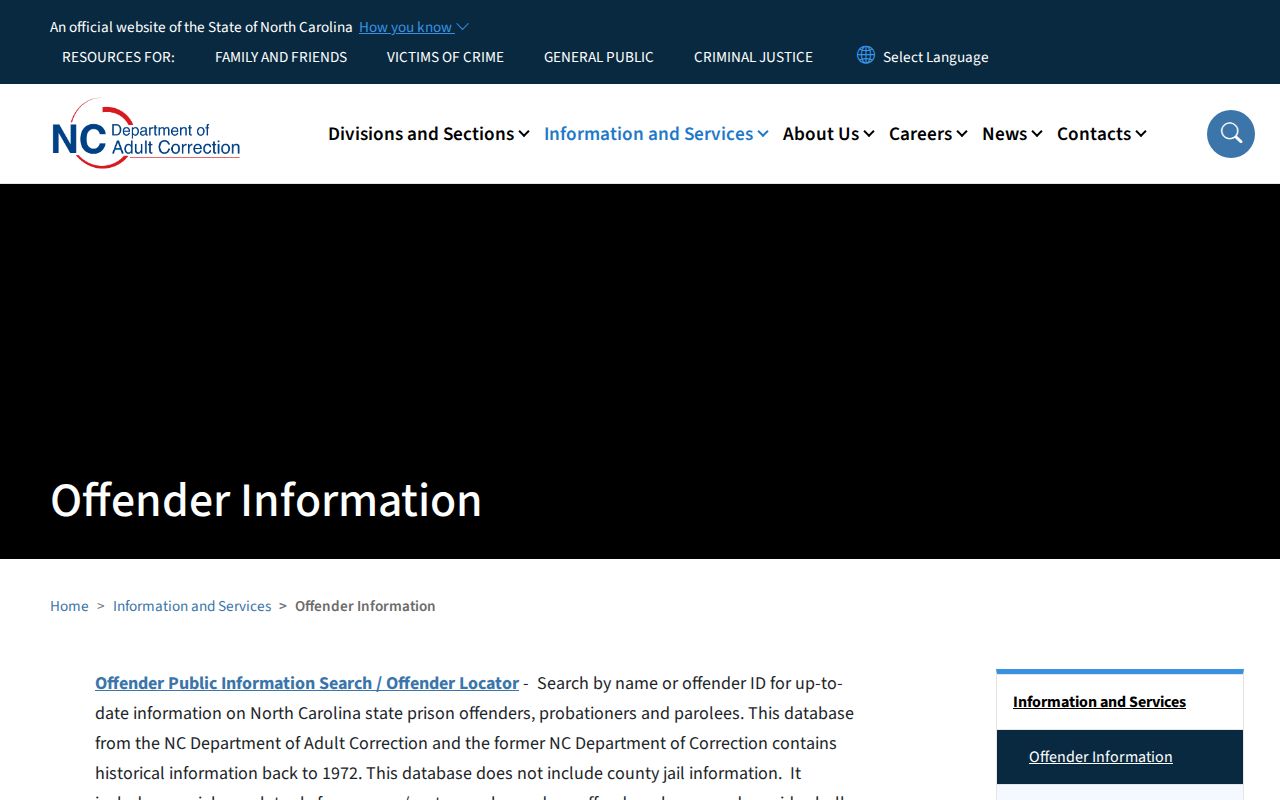
This state system does not replace an Orange County detention inquiry. Keep its purpose, jurisdiction, and displayed date separate from civil, property, voter, or vital records.
The North Carolina Sex Offender Registry is the source for the registry image.
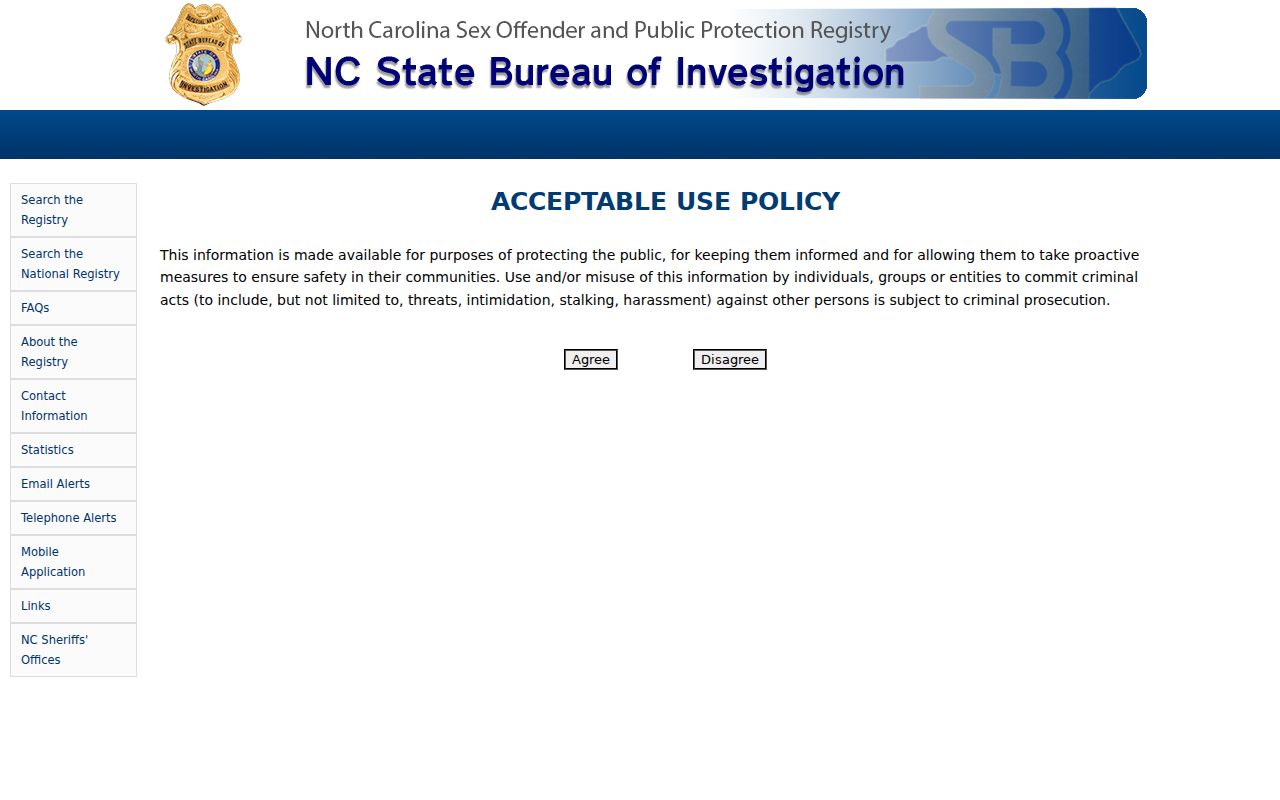
Registry information has its own legal purpose and identity limits. The official guidance warns against threats, intimidation, stalking, harassment, and misuse. Do not copy registry details into a resident profile or use a result to target a household.
Chapel Hill Lookup Privacy
Chapter 132 openness has limits. North Carolina’s Address Confidentiality Program provides a substitute address and mail-forwarding mechanism for qualifying survivors and household members. Agencies may need an actual address internally while protecting it in public-facing systems. If a result shows a substitute address, redaction, partial party information, or no result, do not try to reconstruct a protected location from property, voter, permit, or court material.
Voter files exclude full birth date and key identity numbers. Vital records protect birth, parent, medical, adoption, and witness-related information. Court records can withhold data in protected matters, and town requests may be routed or redacted. Use the least identifying fact that answers the stated question, such as a dated town connection or a public organization role.
Lawful use. Use a Chapel Hill resident lookup for personal, lawful research, family history, reconnecting, estate work, or finding the right custodian. Never use public records to stalk, harass, intimidate, monitor, or harm another person.