
Chapel Hill Previous Residents by Era
A backward search changes sources as the time period changes. The modern deed index provides a dated instrument trail, and PIN History can preserve links to prior owners or parcel changes. For older household evidence, the available directories, library databases, maps, newspapers, cemetery indexes, and Town archives each provide a narrower snapshot. The table distinguishes what each source can establish. It does not turn an owner, map, or name hit into proof of continuous occupancy.
| Source | Years it covers | Where held | What it shows |
|---|---|---|---|
| Orange deed index | Displayed September 1, 1932 to July 31, 2026 | Orange County Register of Deeds | Indexed property parties, role, date, document type, book/page, and related identifiers |
| Orange PIN and GIS history | Current application with recorded historical fields | Orange PIN Inquiry | Parcel, current and prior owner paths, legal description, recorded date, book/page, and parent/child clues |
| Chapel Hill directories | Confirmed digital editions: 1959 and 1961 | Chapel Hill Public Library and Historical Society resources | Dated name, street, telephone, occupation or household clues, subject to gaps |
| Orange County local history records | Varies by collection | Rebecca B. Wall Local History Collection | Newspaper microfilm, deed and will indexes, census material, and local research holdings |
| Town minutes archive | 1869 to present, in archive ranges | Chapel Hill Town records archive | Dated public-meeting and municipal context, not a household directory |
Start with the source nearest to the period in question. An index result is a lead to verify. An unavailable year, a changed number, or a missing map result should remain an unresolved gap instead of being replaced with a guess.
Trace Chapel Hill Previous Residents Through Deeds
For ownership history, begin with the address or PIN in Orange PIN Inquiry, then move to the Orange County Register of Deeds index. The index accepts party name, grantor/grantee/either, date range, party type, description or PIN, document number, book, and page. It offers exact, begins-with, contains, Advanced Similar Name, and Soundex modes. Record the search role and match method, since a name can appear as a party in more than one capacity.
- Record the current parcel’s PIN, legal description, current-owner field, recorded date, and book/page reference from the PIN or GIS result.
- Search the current owner or PIN in the deed index, with a date range and party role. Capture document type, recording date, book/page or instrument number, and every relevant party role.
- Use the seller from that instrument as a grantee search for an earlier acquisition, then repeat the documented sequence backward.
- Compare each legal description and parcel relationship before joining records. A subdivision, recombination, or different street number can break a naive address chain.
- For records beyond the online display, contact the Register of Deeds real-estate records office about public inspection or a copy. An index hit is not a certified copy.
- Grantor
- The party conveying or transferring the recorded interest in an instrument.
- Grantee
- The party receiving that recorded interest. The role is tied to that document and date.
- Chain of title
- A sequence of dated conveyance records used to trace recorded property interests backward.
- Legal description
- The recorded property description that helps match older instruments when a street address or number changes.
Note: The Orange index is free to search, but printing requires login and the inspected sources did not document online image pricing or certified-copy ordering.
Chapel Hill Parcel History Before Names
PIN Inquiry includes PIN Inquiry, Interest Owners, Interest Owner Search, Prior Owners, and PIN History tabs. Its fields include PIN status, township, current owner, legal description, recorded-date range, book/page, and sub code. PIN History can show parent and child relationships with document icons. This makes the parcel history a useful control before two similar historic street references are treated as the same place.
Orange GIS adds physical address, owner, parcel ID, NCPIN, account number, map layers, tax-card access, and parcel-location tools. Its help identifies adjoiners and buffers as geography tools, not as evidence that people share a household or history. Preserve the source date and distinguish a tax or ownership field from an occupancy claim.
Pair Chapel Hill Directories with Census Years
Previous residents become household evidence only when the date is explicit. The 1959 Hill’s Chapel Hill directory and the 1961 Hill’s directory, including Carrboro, are confirmed digital editions. They do not prove that every year exists. The Library of Congress guide warns that city-directory coverage and arrangement vary, and entries can show an address, telephone, occupation or professional description, spouse or household clue, and organization information.
- Transcribe the directory entry exactly, including initials, street suffixes, apartment or room notation, and abbreviations such as residence markers.
- Check the next available directory year rather than assuming an uninterrupted annual run. The local research did not confirm complete holdings before 1959 or after 1961.
- Pair a dated directory with the closest available census image or genealogy database entry, recording its census year and enumeration geography.
- Seek a second independent signal, such as a newspaper notice, deed, town minutes, cemetery record, or local-history collection item, before attaching the person to the address.
A census household is historical evidence, not a current address. The Orange County Local History Collection lists county census material and newspaper microfilm from 1820 to the present, while access to some library databases may depend on the library’s authentication. The directory collections themselves are described on the Chapel Hill city directory page.
Chapel Hill Previous Residents at Trail Endpoints
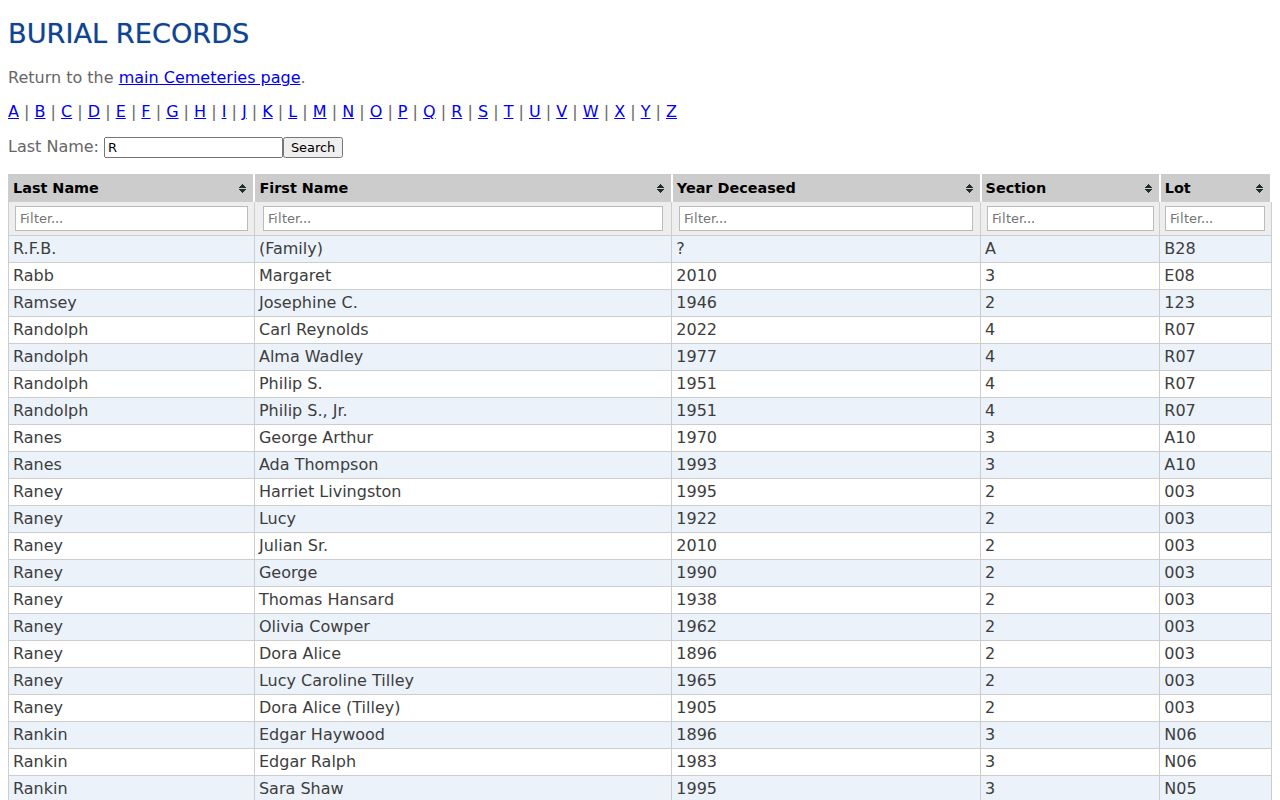
Obituaries, cemetery entries, probate, and vital-record routes can test a historical match without claiming a complete biography. The Old Chapel Hill Cemetery search returns columns for last name, first name, year deceased, section, and lot. It can provide a stable dated identity clue, but it does not prove where the person lived at death. The cemetery’s history also warns that many African-American sections lack markers, so a missing marker or search result is a gap, not proof of absence.
The Old Chapel Hill Cemetery search interface shows the limited historical fields available from this public source.
For a qualifying family-history request, North Carolina Vital Records and the Orange County Register of Deeds vital-record service require event-specific information and may require a qualifying relationship, authorization, or identification for a certified result. Vital materials are not an unrestricted name database.
Chapel Hill Town Records Add Dates
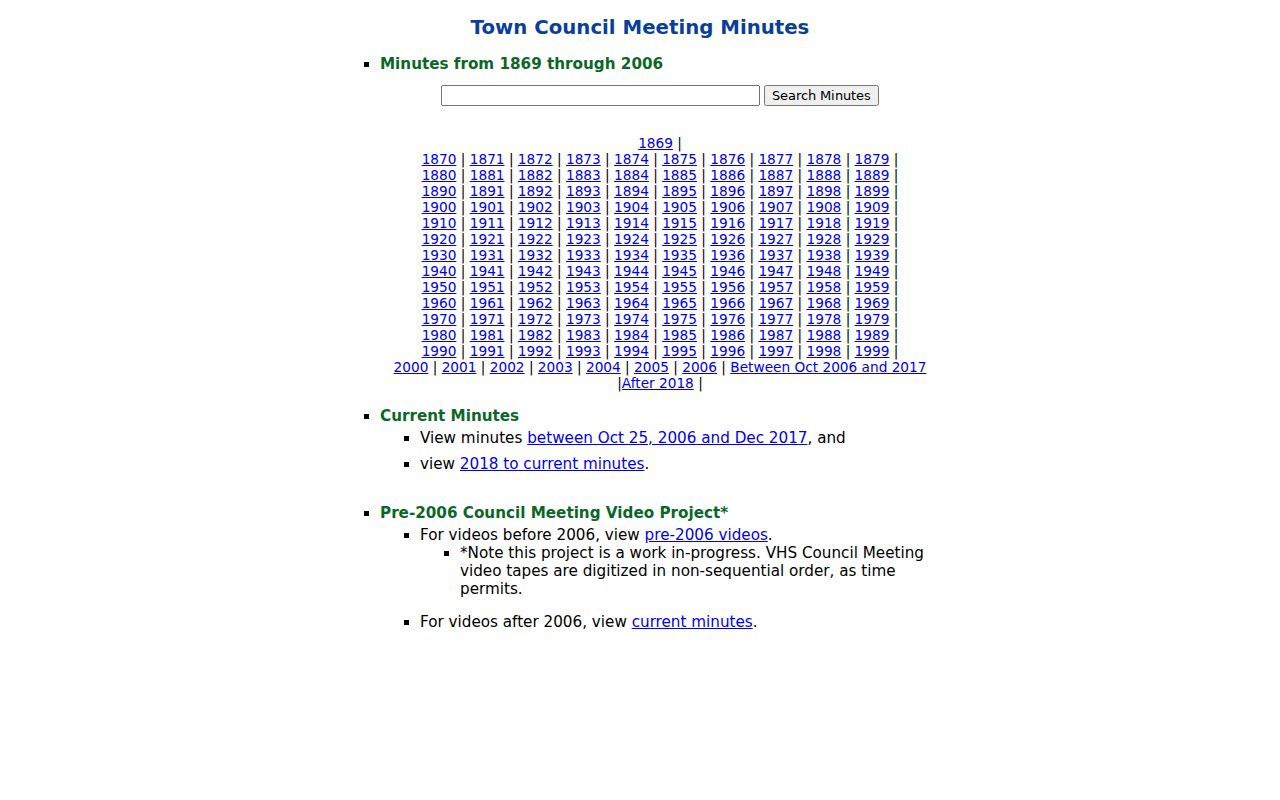
The Chapel Hill Town records archive is divided into 1869–2006, 2006–2017, and 2018–current ranges. Minutes and agendas can provide dated civic, petition, project, or public-meeting context when a household source is thin. They are not a resident register. A person named in a municipal record may be an official, applicant, speaker, or participant rather than an address occupant.
The Town archive landing page is a starting point for its date-range record collections.
For records not posted in the archive, the Town directs public-records requests through the Town Clerk public-records route. State the department, subject, date range, record type, and whether inspection or a copy is sought. North Carolina Chapter 132 does not require the agency to create a new complex database query.
Chapel Hill Maps Support Address History
The NCSU Sanborn map list identifies five Chapel Hill maps covering 1911 through 1949. The research did not establish the exact five edition years, sheet numbers, repository links, or completeness of each set. A map can show a building’s footprint, material, use, stories, street, and lot relationship. It cannot establish who was present inside on a particular map date.
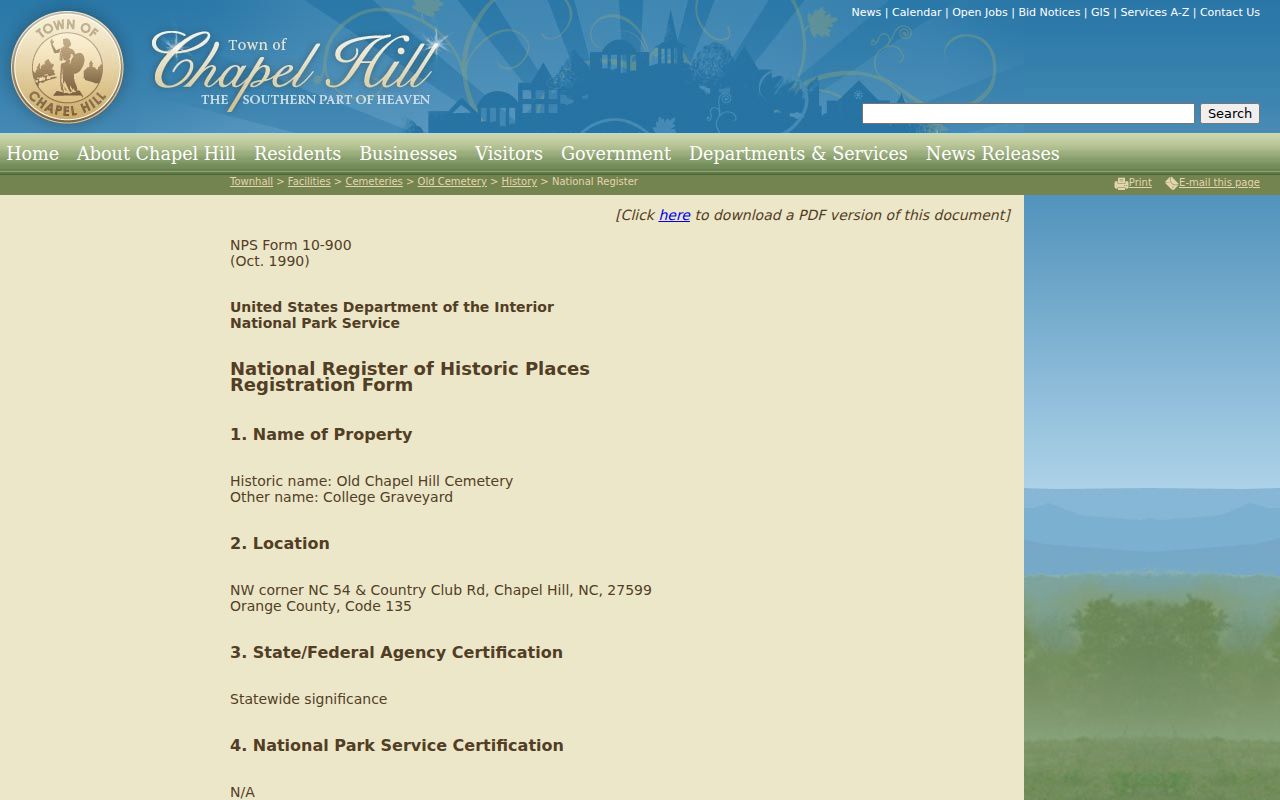
The Old Chapel Hill Cemetery history provides a local example of why historical records must be read with their gaps and context.
Combine a map with a dated directory, tax or deed record, and newspaper or town source. For early Chapel Hill, a historic-district report says city directories did not exist before the 1950s, so maps, tax evidence, architecture, and related sources need to carry more of the historical work.
Verify Chapel Hill Past Households Twice
A same-name match can be wrong even when an address seems familiar. Use at least two independent signals before connecting a person to a Chapel Hill record: a full name plus an uncommon address, a middle initial, a dated institution, a family relationship supplied by the source, a parcel instrument, or an obituary detail. Keep unresolved candidates separate. Historic campus affiliation is also not automatic evidence of a Chapel Hill town residence.
For a disputed or incomplete address history, note the source, publication or record date, address exactly as printed, and reason for the match. This preserves useful research while acknowledging changed numbers, annexations, subdivisions, and missing directory years.
Note: A historical address is a dated clue, so preserve its record type and date instead of treating it as a current location.
Limits on Chapel Hill Previous Residents
These sources do not support a complete citywide list of who lived at every Chapel Hill address. Deeds show recorded interests, not necessarily occupants. Directories have gaps and can carry stale entries. Maps show structures and lots, not people. Cemetery, vital, and probate sources have their own access limits. A missing result can reflect a protected address, redaction, a different county or municipal context, an older street number, or an unindexed record.
North Carolina’s Address Confidentiality Program can protect a participant’s actual address through a substitute-address process. Respect an absent or partial result, and contact the custodian rather than trying to combine public records into a profile.